


Renting doesn't mean living with bare walls and one overhead bulb. The trick is to build the room from things that leave no trace: adhesives matched to the right wall, lights that plug into an outlet, and furniture that carries the decorating weight instead of a nail. Get those three working together and a rental can look as considered as a place you own.
Know the Wall Before You Stick Anything to It
Removable adhesives fail for predictable reasons: dust, texture, fresh paint and cold. Wipe the spot with isopropyl alcohol, let it dry completely, then press. Skip the spots above radiators, in direct afternoon sun, or anywhere the wall feels cold to the touch.
Paint finish matters more than most people expect. A smooth, sealed finish gives an adhesive strip something to grip and something to release from. Chalky flat paint is the riskiest surface, because the strip can take a patch of colour with it. If a wall was painted recently, wait at least two weeks before hanging anything — fresh paint is still curing and will peel away with the tab.
Test in a hidden corner first. Press a small strip on, leave it for a day, then peel it slowly. If paint lifts, change your approach: lean, don't stick.
Surfaces That Fight Back
Brick, textured plaster, popcorn finishes, wallpaper and dusty concrete all defeat removable adhesives. On those walls, work with freestanding pieces, floor lamps and leaning art instead.
Adhesive Hooks and Strips, Used Properly
Most complaints about adhesive hooks come down to operator error. A few habits make the difference between a secure frame and a crash at 2am:
- Halve the stated weight limit for anything with a lever arm — a hook beside a door, a frame people brush past, or anything holding a cord that gets tugged.
- Follow the curing time. Press firmly for about 30 seconds, then wait roughly an hour before loading it. Hanging a mirror two minutes after sticking the hook is how walls get damaged.
- Stick at room temperature. Cold walls and cold strips don't bond well.
- Remove slowly, straight down. Pull the tab parallel to the wall, stretching it long and thin, never out towards you. A hair dryer on low heat for a few seconds softens the adhesive first.
- Keep spare strips. Buy one size up from what you think you need and store the leftovers in a drawer for the next move.
Wall Decor That Skips the Wall Completely
A leaning arrangement can hold a whole wall. A tall floor mirror at an angle, a slim ladder shelf beside it, and a framed print resting on a narrow console gives you depth and height without a single hole. Push tall pieces against the wall and add grippy pads underneath so they can't slide on hardwood.
For the wall itself, lightweight is your friend. Canvas prints, fabric hangings, woven wall pieces and paper art can all be held with adhesive clips rated for a few hundred grams. Heavier frames belong on a picture ledge or a bookshelf, propped and overlapping. Keep it simple: three to five pieces, one palette, and a bit of breathing room between them. A crowded leaning shelf reads as clutter; a sparse one reads as styled.
Tension rods are another quiet hero. Inside a window recess they hold a sheer curtain or a lightweight voile with no hardware at all, which softens a room instantly — see the next section for why that matters.
Lighting You Can Unplug and Take With You
Overhead lighting flattens a room. Plug-in options fix that without touching the wiring.
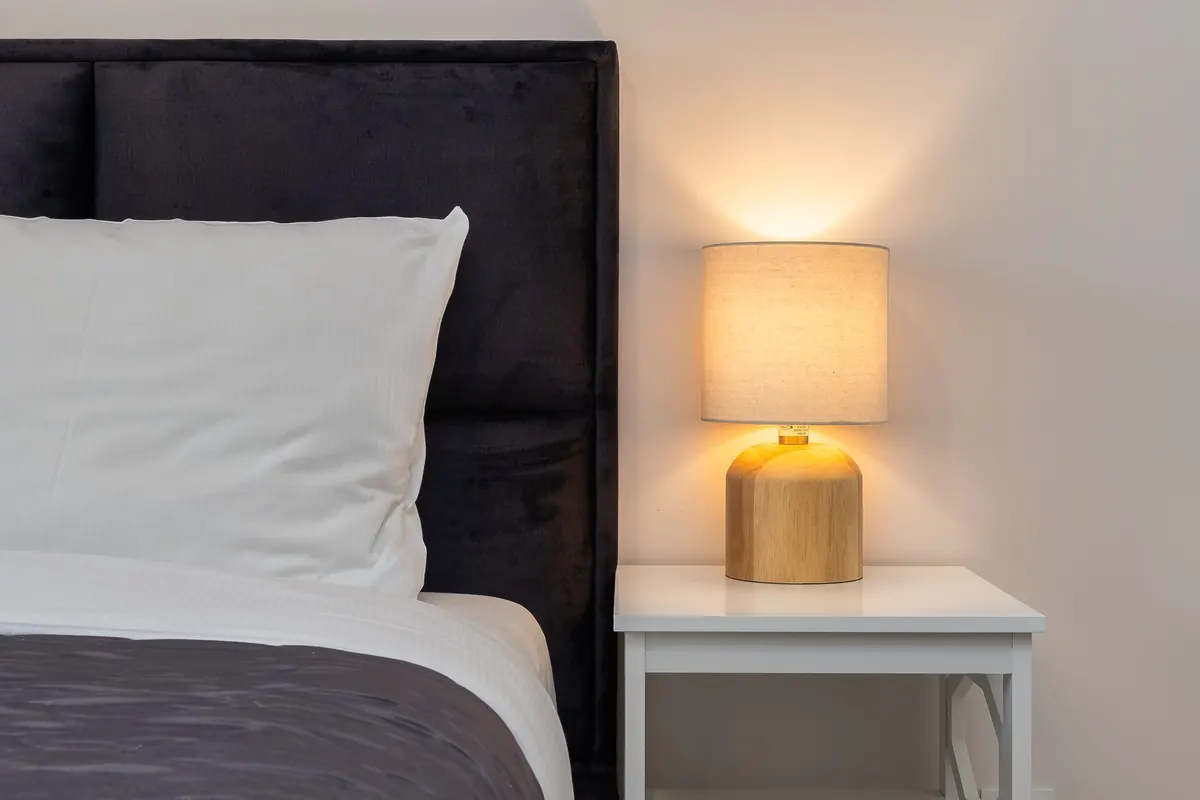
A plug-in wall sconce with a fabric cord is the classic rental upgrade. Run the cord down the wall and hide it with an adhesive-backed cable raceway painted to match, or drape it deliberately and clip it with small adhesive cord clips. Behind a bed or a sofa, a rechargeable table lamp gives you a warm pool of light with no cord at all.
Clip-on lamps work on headboards, shelves and desk edges. Battery puck lights suit dark cupboards and closets. For a softer evening mood, a warm bulb is the detail that matters — look for something around 2700K rather than the bright, blue-white 4000K and above that makes a room feel like an office. Add a smart plug with a dimmer function and a plug-in light becomes controllable from your phone.
Two safety notes worth taking seriously: don't run cords under rugs or across doorways where they'll be stood on, and don't chain extension leads together to reach an awkward corner. Move a floor lamp closer to the outlet instead.
Texture: What Makes a Rental Feel Finished
Holes aren't what makes a room feel decorated — layers are. Instead of a heavy wall treatment, put your budget into things that sit on the floor.
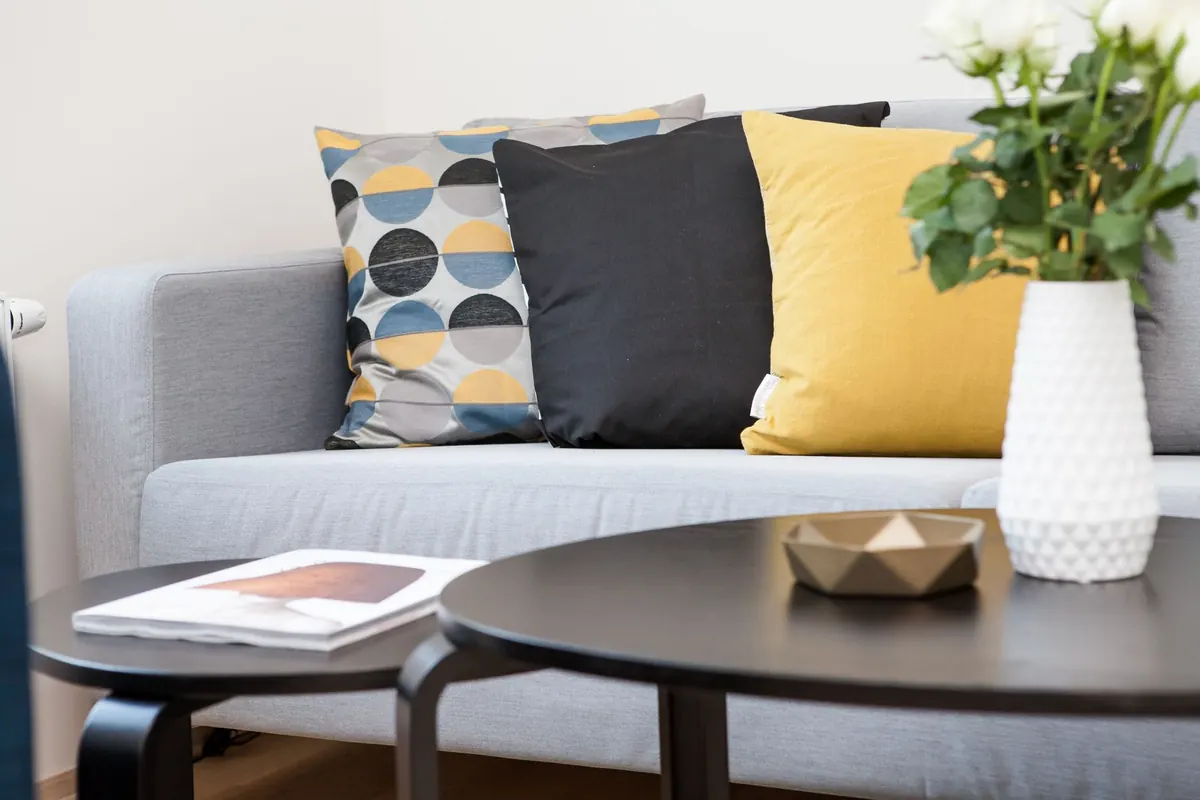
A rug on top of existing carpet instantly defines a seating area; choose a low-pile rug and add a thin pad so it doesn't creep. Curtains, hung high and wide, make windows look bigger and absorb some of the echo in a bare room. A throw over the arm of a sofa, a couple of textured cushions, a woven basket for blankets, a plant on a stand: none of it touches a wall, all of it adds depth.
If you're tempted by removable wallpaper for an accent wall, treat it as a considered risk. It sticks well on smooth, sealed paint and badly on everything else, and it can pull at a finish when it comes down. Test a small square somewhere hidden, and check your lease before committing to a full wall.
The Move-Out Once-Over
Removing everything is the part renters dread, and it's usually easier than expected. Work slowly: warm each adhesive with a hair dryer, pull the tab straight down along the wall, and use dental floss behind a stubborn frame to saw through the foam rather than yanking. Any tacky residue left behind comes off with a little rubbing alcohol or a dab of vegetable oil worked in with your thumb.
Take photos of the walls the day you move in, before you hang anything. Keep the original packaging and spare strips in a labelled bag so you're never guessing at weight limits. And if a wall is delicate, historic, or covered in something unusual, ask your landlord before you experiment — most are happy to say yes when you ask first.
Photo: Terje Sollie / Pexels
Related posts
More stories you’ll love reading