


The first properly cold evening of autumn tends to arrive without warning. The light turns flat and grey by late afternoon, the radiators come on, and a living room that felt airy and generous in July suddenly looks bare. Layering textiles is the quickest way to change that — no furniture moved, no decorating budget required, and the difference is immediate.
Done well, autumn layering does two jobs at once. It adds genuine insulation, and it softens a room visually, so the space feels lived in rather than staged. The trick is working to a plan, so the result looks collected rather than as though you tipped a blanket box over the sofa.
Start with fabric weight, not colour
The most common mistake in seasonal styling is jumping straight to colour and treating weight as an afterthought. Summer textiles are thin, smooth and slightly reflective: linen, cotton voile, pale flatweaves. Bring those into October and the room stays cool-looking no matter how warm the palette is.
Autumn fabrics have density — wool and wool blends, brushed cotton, bouclé, corduroy, velvet, felted knits, tweed, thick jacquard weaves, sheepskin. They absorb light instead of bouncing it back, which is exactly what you want when the daylight is weak.
A useful test: pick the throw or cushion up and squeeze it. If it springs back thin and flat, it belongs in the summer pile. Heavier pieces hold a fold, sit up on a sofa, and give the eye something to rest on.
Choose a palette of three colours — and stick to it
Warm autumn colours are easy to overdo. Rust, ochre, terracotta, mustard, olive and plum are all lovely; all at once, they fight. A reliable structure is three colours in three roles:
- An anchor neutral — oatmeal, mushroom, warm grey, camel or charcoal. This covers the largest surfaces: the rug, the curtains, the plain cushions.
- A warm mid-tone — ochre, rust, burnt orange or olive green. This is the colour people notice, and it works hardest in a throw or a pair of cushions.
- A deep accent — plum, oxblood, forest green, bitter chocolate. Small doses only: a single velvet cushion, a lamp shade, a table runner, a candle holder.
If your sofa is already a strong colour, let it play the mid-tone role and keep everything around it in neutrals plus one deep accent. A finished room rarely needs more than four colours in total, including whatever is on the walls.
Throws: the fastest layer you can add
One good throw changes a sofa more than anything else in the room. Two, layered in different textures, is where autumn really begins.
Keep one heavy, structured throw — wool or a wool blend in a plain or herringbone weave — and one softer, more tactile piece, such as a chunky knit or a brushed cotton throw with a tasselled edge. Fold the heavy one over the back or arm of the sofa, drape the softer one across a chair, and leave a third in a basket beside the fire or radiator. The basket earns its place: it signals that the textiles are there to be used, not just looked at.
Height helps, too. A throw draped at an angle across a sofa arm reads more relaxed than a neat rectangle folded flat, and it lets the colour sit against the upholstery instead of disappearing into it.
Cushions: build them in layers, not in pairs
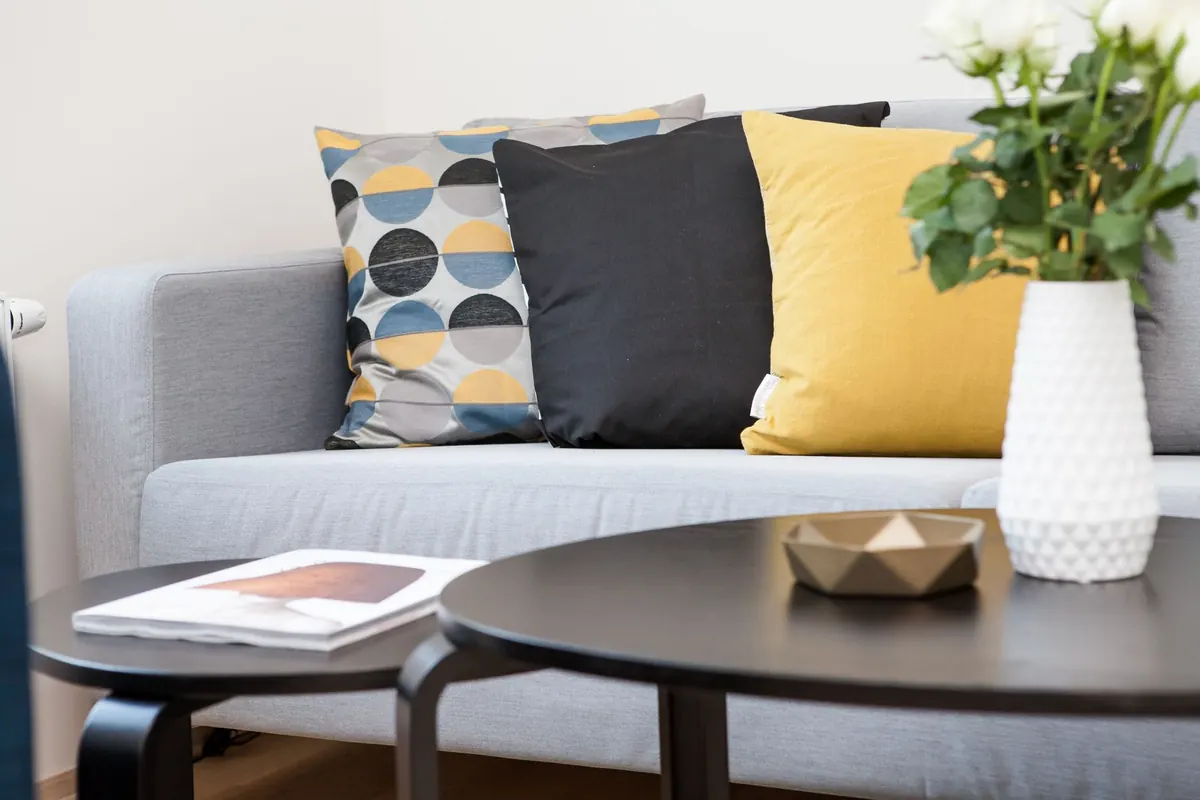
Matching pairs are a fine starting point, but autumn cushions look better mixed. Work from the back of the sofa forward, largest to smallest, so every layer stays visible.
- Two large squares, roughly 55–60cm, at the back — plain wool, linen or a subtle weave.
- Two medium squares, around 45cm, in front — this is where pattern or a warm mid-tone lives.
- One or two small cushions at the front, 30–35cm or rectangular — velvet, bouclé, sheepskin or anything with a little sheen.
- Change texture on every layer, and repeat no more than one pattern. A stripe, a check and a plain weave is plenty.
Match the filling to how the cushion is used. Feather and down feel luxurious but need plumping; polyester holds its shape with less effort. Keep purely decorative cushions a size smaller than you think you need, so they do not push you off the seat.
Rugs: the layer that anchors everything
A rug does more for autumn warmth than any other single purchase, because it separates the seating area from a cold floor and gives the palette something to sit on. Wool is the obvious choice: warm underfoot, hard-wearing, and good at holding deep colour. Jute or sisal works as a neutral base underneath something softer.
Size matters more than pattern. In a living room, aim for a rug that sits under at least the front legs of the seating, ideally all of them, so the furniture feels connected rather than floating around a small mat. If the flatweave you already own is slightly too small, layering a smaller, heavier rug on top in a warm tone is a legitimate fix rather than a compromise — and it doubles the texture underfoot.
The order that works
If you are doing this in one afternoon, sequence saves a lot of rearranging:
- Clear out the summer textiles — thin throws, pale cushions, cotton slipcovers.
- Decide your three colours and note where each one will appear.
- Place the rug first, since it sets the footprint of the seating area.
- Add cushions from the back of the sofa forward, largest to smallest.
- Add throws last, and drape rather than fold.
- Step back, then take one thing away. Restraint is what separates layered from cluttered.
Living with the layers
Autumn textiles need a little maintenance to keep looking good through winter. Plump cushions every few days, or the filling compresses and the corners sag. Rotate throws so one side does not fade in a sunny window. Read care labels before washing: wool often prefers a cool hand wash, while velvet and bouclé are usually better spot-cleaned. If pets share the sofa, choose covers you can unzip and wash, and keep the palest pieces out of the main traffic lane.
As the season moves towards winter, deepen the layering rather than starting again. Add a second throw, swap one cushion for something in a heavier weave, put a sheepskin over an armchair. Small changes made gradually keep the room feeling current instead of frozen in October.
Where to start this week
Pick one surface and fix it properly. The sofa is usually the best place to begin: two large neutral cushions, two mid-tones in a warm colour, one small textured piece at the front, and a heavy throw draped over one arm. That is thirty minutes of work and it will change how the whole room reads.
Then live with it for a few days before buying anything else. You will quickly notice which corner feels cold, which colour is missing, and whether the rug needs to move. Autumn layering is not a single shopping trip; it is a slow adjustment that keeps a room comfortable from the first cold evening right through to spring.
Related posts
More stories you’ll love reading