



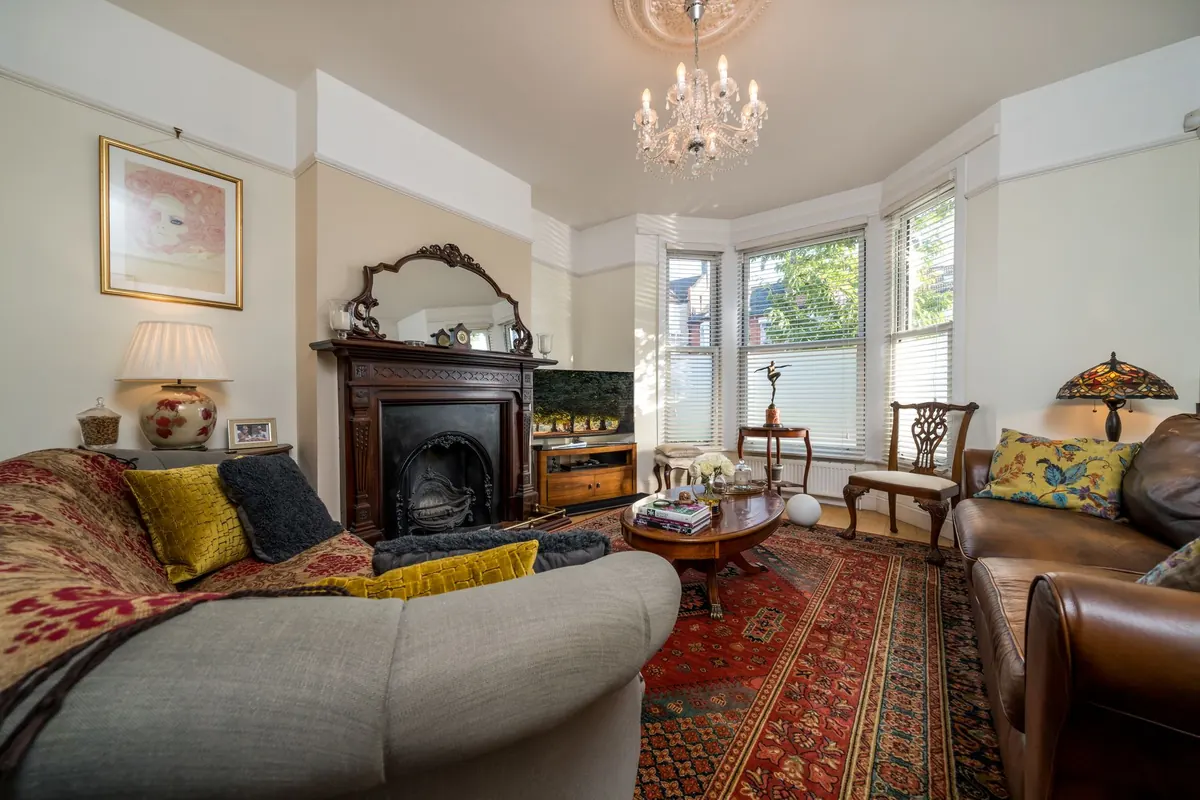
A bay window is often the reason someone fell for a room in the first place: the extra light, the pocket of floor space, the seat you can picture yourself reading in. Then you try to hang something at it. Straight poles refuse to bend, rectangular blinds fight the angles, and the shape that makes the bay charming is exactly what makes it awkward to dress. The trick is to decide early whether you want curtains, blinds or both, then work backwards from the geometry of your window.
Start With the Shape of Your Bay
Before you look at a single fabric, measure the bay itself and note the layout. A box bay has a flat front and two short returns, so it takes a standard track bent twice. A canted or angled bay usually runs in three or five sections, meeting at gentle angles. A curved or bow bay is a smooth arc and needs a track curved rather than bent.
Then check the practical details: Are the reveals deep enough for an inside-mounted blind? Do window handles stick out into the room? Is there a ceiling above the bay, or does it open straight into the room? Is the window uPVC, timber or aluminium? Answers here decide half your options, and it is far easier to rule things out now than after delivery.
Curtain Tracks: The Flexible Workhorse
Tracks beat poles in almost every bay, simply because they can follow a corner. Bendable plastic tracks are cheap and forgiving and can be shaped on site by hand, which suits a shallow angle. Aluminium tracks are more rigid, carry heavier curtains and can be curved to your exact measurements by the supplier, who will want a template or a careful set of dimensions from you.
Ceiling fix or wall fix
Ceiling fixing usually gives the cleanest result in a bay, letting curtains fall from the highest point and keeping the window head clear. Wall fixing works well when the bay has a deep lintel or you want the track hidden behind a valance.
Corded or hand-drawn
A corded track saves you leaning across the sill or squeezing behind a sofa, but plan where the cord will hang: it drops down one side, and you do not want it crossing a doorway or a favourite chair. Hand-drawn tracks are simpler, quieter and cheaper, and fine where the bay is easy to reach.
Blinds for Bays: What Actually Fits
Blinds suit bays that need light control, a low-maintenance look or privacy without bulk. Each type behaves differently in an angled setting:
- Roller blinds give a neat, flat result and work well in a canted bay when each section is measured separately. Watch for the gap at the side where the fabric meets the angle.
- Roman blinds add softness and fold into themselves nicely, but check there is enough clearance above the window head for the stacked fabric.
- Venetian blinds offer fine control over light and are forgiving of slight angle changes; 25mm slats look neater in a small bay, 50mm slats suit a wide one.
- Vertical blinds cope with wide openings and deep bays, though they need headroom to run and can look busy in a small window.
- Day-and-night or duo rollers combine a sheer and a solid band on one mechanism, useful where a bay faces the street.
- Clip-in or no-drill blinds fix into the beading of many uPVC windows without screws, which is ideal for rented homes and awkward frames.
One warning worth repeating: a five-section bay means five control chains unless you plan otherwise. Ask for controls to be grouped on the same side, or consider curtains for the angled sections and a single blind on the flat front.
Pelmets, Valances and Headings
A valance or box pelmet hides the track, softens the top of the window and can tie a bay into the rest of the room. Keep it shallow, around 15–20cm, or it will eat the light that made the bay worth having. A fabric-covered pelmet board is an easy DIY version and looks deliberate rather than improvised.
Heading choice matters more than most people expect. Eyelet curtains need a pole and will not travel around a bend. Pencil pleat and triple pleat work happily on a track, as does a wave or S-fold heading, which is the most contemporary look and needs a track designed for it.
Measuring a Bay Window
Measure in millimetres with a metal tape, never a fabric one, and write everything down.
- Measure each section separately across the top, at the point where the track or blind will be fixed.
- Add your overlap and return allowance, usually a few centimetres at each end so curtains stack clear of the glass.
- Measure the drop from the intended fixing point down to the floor, sill or radiator top, then decide whether you want curtains to break at the floor or finish just above it.
- Check for obstructions: sills, handles, radiators, plug sockets and furniture. A blind mounted inside the recess needs a couple of centimetres of clearance.
- Sketch the bay from above and mark the angles. That sketch is what a track supplier needs.
Fixing: What Your Wall and Ceiling Can Take
Bays are often the draughtiest, coldest part of a house, and heavy interlined curtains pull hard on their fixings. Into plasterboard, use proper cavity fixings and aim for joists or studs wherever you can. A timber batten screwed across the head of the bay gives you a solid, straight line to fix into and makes levelling much simpler. Solid masonry takes standard plugs, but heavier loads belong in the lintel or structure behind. If you are unsure what is behind the plaster, get a joiner or fitter to check before you drill.
A Few Last Checks Before You Order
Weigh up fabric against fixings: a lightweight linen on a bendy plastic track is fine, a triple-lined wool is not. Order all sections at the same time so the fabric comes from one dye lot. Keep your measurements and sketch, note which side the cords or chains will drop, and fit the track before the curtains arrive if you possibly can. That way the only thing left to do is hang them and enjoy the light you bought the house for.
Photo: Wellington Silva / Pexels
Related posts
More stories you’ll love reading